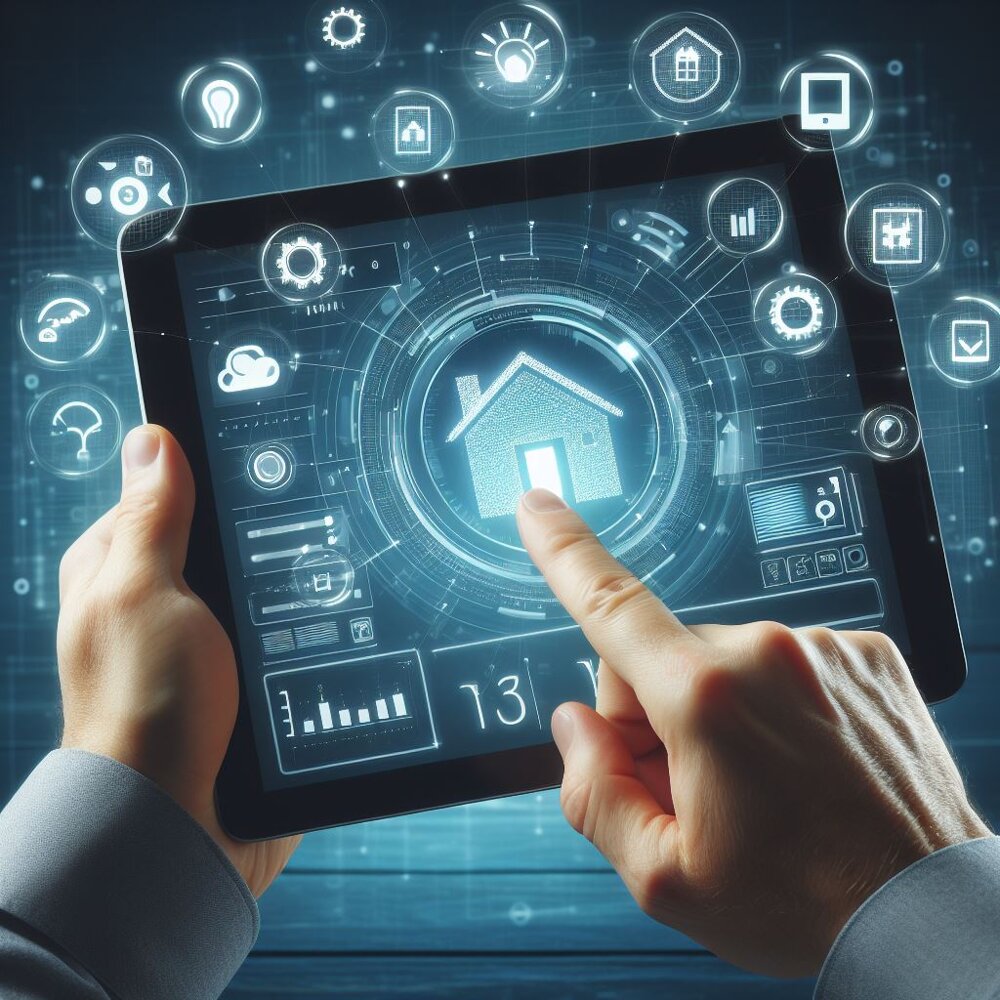

Technology and Innovation - The Building Management System (BMS)
A "smart" building involves particular attention to system management and energy consumption. The BMS (Building Management System) helps us precisely in this area.
A “smart” building pays particular attention to plant management and energy consumption. The BMS (Building Management System) helps us precisely in this area.
The BMS represents a system for active and passive supervision of the various systems that make up the building: air conditioning, intrusion detection, electrical, aeraulic, plumbing and sanitary, ... All through a single hardware, which collects data from the environment (for example through probes or meters), and software, controllable from a simple PC or a smartphone.
The BMS therefore allows you to view the data provided by the instruments in the environment and bring them into our software, which will be programmed with automations that will provide instructions to bring the environment to the preset conditions. This means that it is not able to autonomously choose the ideal conditions, which must be preset by a specialized technician.
The BMS system fully represents the concept of a Smart Building, that is, the so-called "intelligent buildings". The importance of this technology is easily understood even from the energy data collected. The integration of such a system is estimated to lead to savings ranging from 10% to 30% of the total energy required by an identical building not equipped with BMS technology. Obviously, in addition to the energy issue, this saving also translates into economic savings, despite the costs to be faced for the implementation of the system itself.
This automation of repetitive procedures makes it possible to improve the performance of every component of the structure, which in the case of large buildings has elements that are difficult to manage without this kind of technology.
As previously mentioned, with the BMS several systems that make up the building can be controlled, including:
- Air conditioning system: systems that regulate heating, ventilation, and air conditioning, which allow for constant air quality by keeping CO2 levels, relative humidity, and pressure under control.
- Sensors: probes and meters placed in the environment, which return data to the software, which must process and analyze them, verifying the correct functioning of the system components.
- Electrical and special systems: constant monitoring of the building's consumption, with management of lighting (also through additional technologies such as the DALI system) and the photovoltaic system.
- Other systems: control of the camera system and intrusion alarm system, as well as management of the fire and emergency system if integrated.

Example of a BMS system developed for a project by the Pro Solution studio
Example of a BMS system developed for a project by the Pro Solution studio